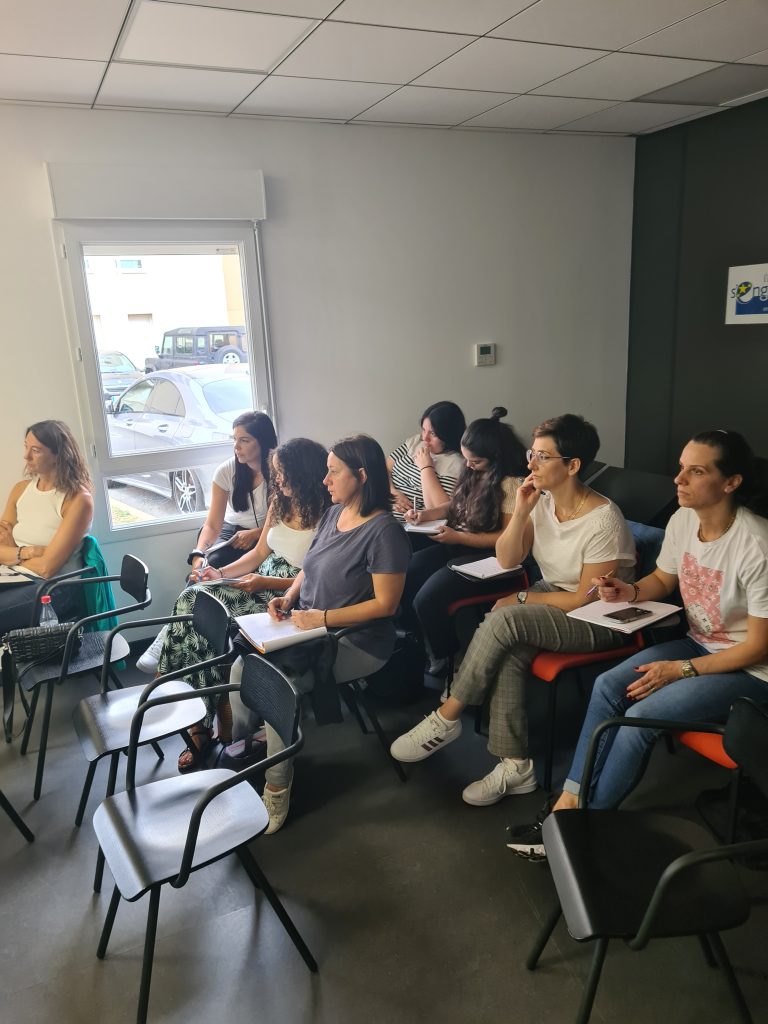
The French pilot of the LET’S MIMIC project was carried out between 10 and 20 May 2026 by Etudes et Chantiers Corsica ILE (ECC) at its training and insertion sites in Bastia, Folelli and Miomo, Corsica. ECC is a non-profit association specialised in socio-professional integration through environmental, ecological and community-oriented activities. It runs several Ateliers et Chantiers d’Insertion (ACI, work-integration workshops) dedicated to green spaces, circular economy, soft mobility and social support.
The pilot involved 23 participants:
- Young people on socio-professional integration pathways.
- Learners in vocational pathways related to green spaces, construction, environment and maintenance.
- Trainees enrolled in courses delivered on ECC sites.
Most participants have a practical orientation and learn best through visual, hands-on and real-world scenarios. Biomimicry was new to almost all of them.
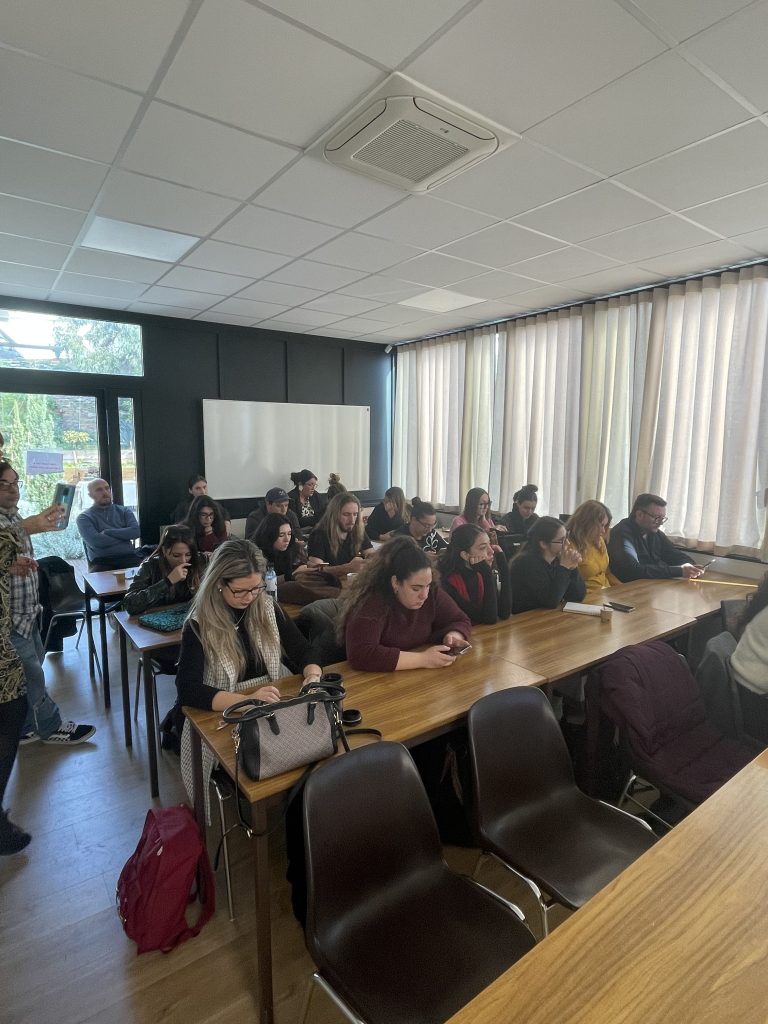
The pilot was integrated into ECC’s regular activities: ACI workshops on green spaces and landscaping, environmental awareness sessions, and collective workshops on sustainability and ecological transition. This context was particularly suitable because participants already work on real environmental challenges in their daily activities, such as waste reduction, wildfire prevention, biodiversity, soil restoration and the sustainable maintenance of green spaces. The pilot aimed to introduce nature-inspired innovation as a practical way of addressing these challenges and to strengthen the green skills needed in emerging jobs such as environmental maintenance, nature-based solutions and ecological landscaping.
The pilot followed the phases of the LET’S MIMIC pilot model:
The pilot followed the phases of the LET’S MIMIC pilot model:
Inspiration. Participants discovered concrete examples from the Biomimicry Cases and Solutions, such as fire-resistant ecosystems, natural water filtration and termite-inspired cooling. The examples introduced the idea of ecological innovation and led to discussions on how nature already solves problems similar to those met on ECC work sites.
Challenge selection. Participants were organised in small teams. Each team chose a challenge linked to local environmental issues and ACI activities. The Biomimicry Open Challenges and Training Modules on offer included wildfire prevention and early detection (CS8), urban and rural flood management (CS9), microplastic pollution prevention (CS11), efficient microplastic removal in coastal areas (CS5) and reducing urban heat islands (CS22). Teams could also choose the Training Module on termite mound cooling for natural ventilation (TM06).
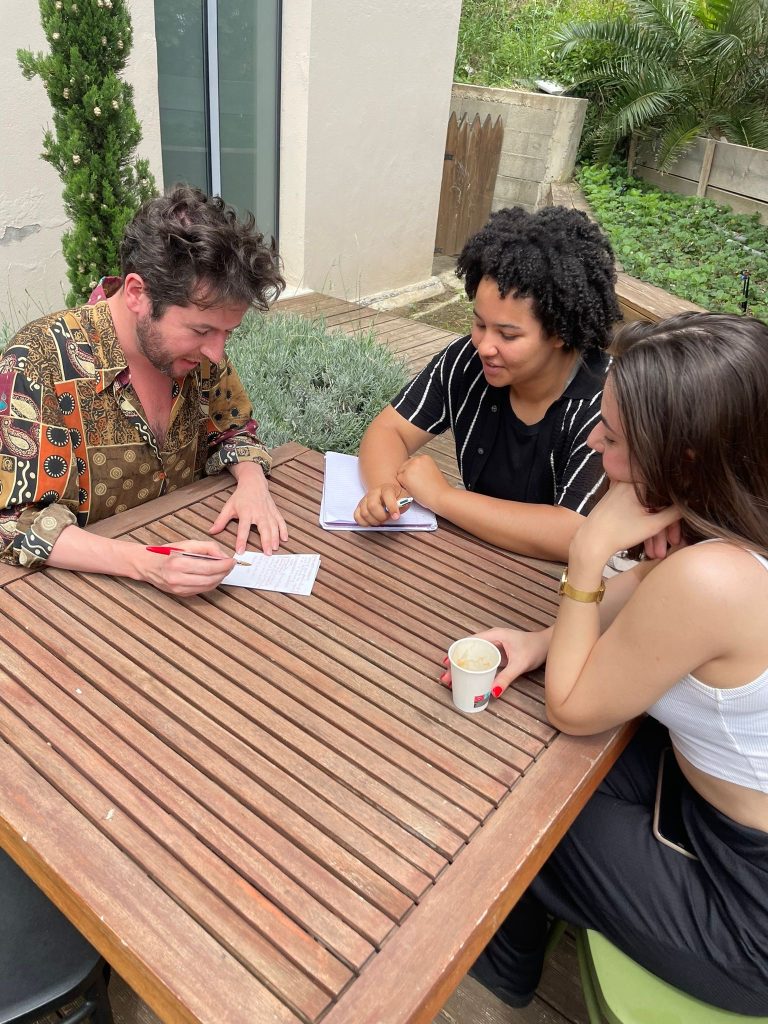
Applying biomimicry. Teams used the LET’S MIMIC Biomimicry Digital Learning Platform to go through the six biomimicry steps. They identified a local need (DEFINE), for example fire prevention along paths, and translated it into a biological question (BIOLOGISE). They then explored natural models (DISCOVER), extracted their principles (ABSTRACT) and turned them into a practical idea (EMULATE). Finally, they checked whether the idea was feasible in the ECC context (EVALUATE). ECC trainers supported the teams throughout, especially during the more abstract stages, and helped them relate the biological examples to their own professional practice.