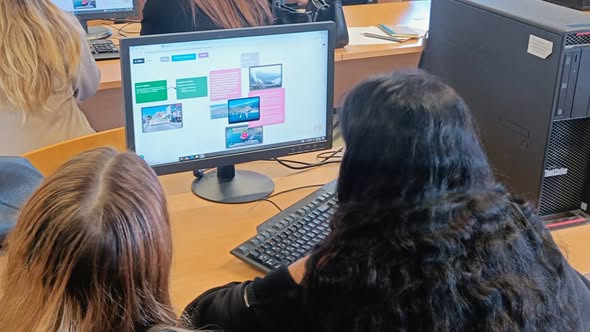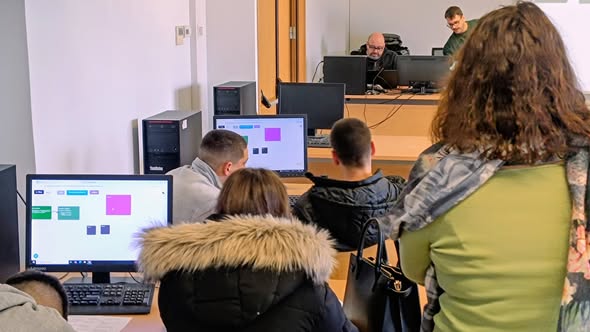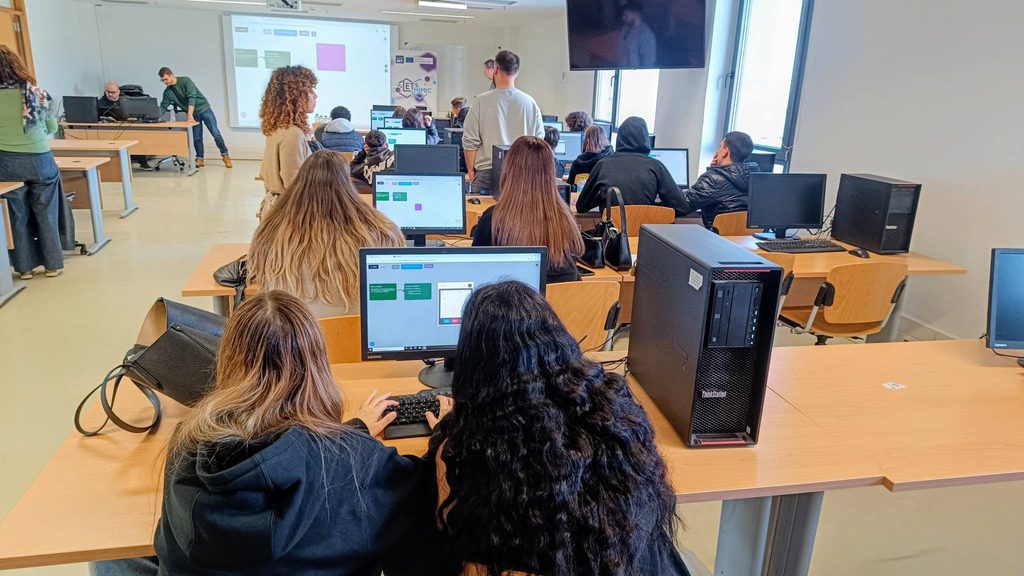
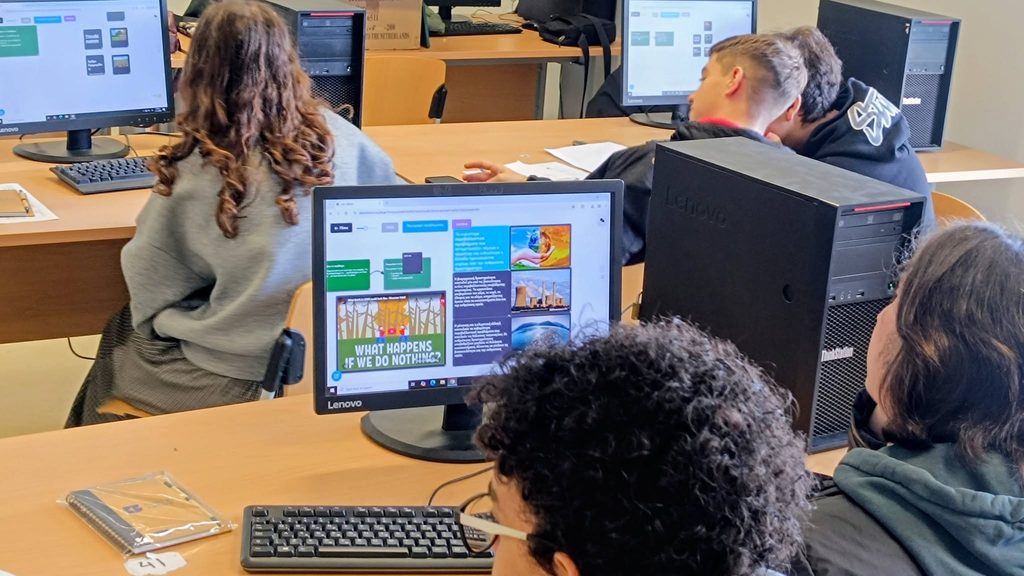
On 11 November 2026, the Department of Electrical and Computer Engineering of the University of Thessaly, through its Creative Technologies Learning Lab (CTLL), welcomed approximately 20 students and 3 accompanying teachers from the 1st Vocational High School of Volos. The LET’s MIMIC multiplier event took place in the Department’s computer laboratory and introduced participants to nature-inspired innovation and its applications in vocational education and sustainable urban development.
The central challenge of the workshop was to imagine how Volos could become a greener, healthier, and more climate-resilient city. By drawing on examples from biology, architecture, engineering, and urban planning, participants explored how nature can inform practical solutions to problems encountered in their own community.
The session opened with a guided introduction to biomimicry and the LET’s MIMIC project. Students explored the 6 stages of the biomimicry process, namely DEFINE, BIOLOGIZE, DISCOVER, ABSTRACT, EMULATE, and EVALUATE, and discussed how the approach moves from understanding a challenge to learning from biological strategies and designing possible solutions.
A series of visual examples illustrated different ways in which natural systems can inspire human design and more sustainable environments:
- Passive cooling inspired by termite mounds. Natural ventilation and temperature-regulation strategies helped students understand the principles of reducing energy demand in buildings.
- Wildlife crossings over motorways. Vegetated bridges and corridors showed how infrastructure can accommodate animal movement and reduce habitat fragmentation. This was presented as a complementary nature-based design intervention.
- ACROS Fukuoka in Japan. The integration of offices and extensive terraced greenery illustrated how buildings can incorporate vegetation and reconnect built environments with green space.
- Low-drag swimming apparel inspired by aquatic animals. The example of shark-skin-inspired racing swimsuit design showed how observations of nature have influenced attempts to reduce resistance in water.
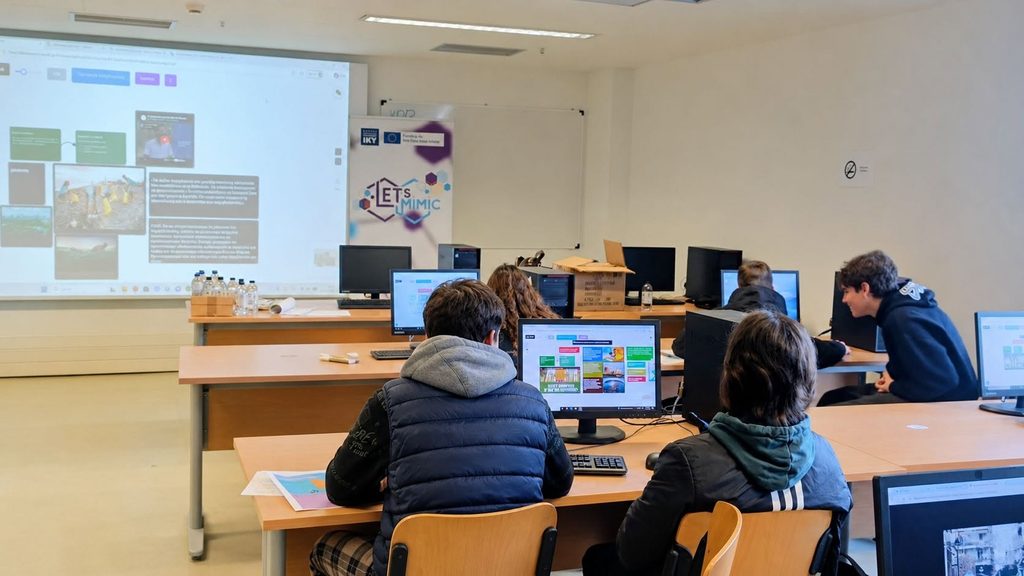
Activities helped distinguish designs inspired by biological functions from wider nature-based interventions, while highlighting the possibilities of sustainable engineering and urban planning.
Students then worked in small teams on the challenge “How can we make Volos more sustainable?” They considered local issues such as heat in public spaces, energy use in buildings, limited urban greenery, flood management, and coexistence between infrastructure and biodiversity. Using the LET’s MIMIC methodology and learning resources as a guide, teams identified a problem, explored relevant natural examples, and developed preliminary concepts suited to the city’s needs.
The workshop concluded with the presentation and discussion of student ideas. Participants were invited to explain the sustainability challenge addressed, their source of inspiration, and the potential benefits of their proposed approach. The exchange encouraged reflection on local relevance, environmental benefits, and possible improvements.