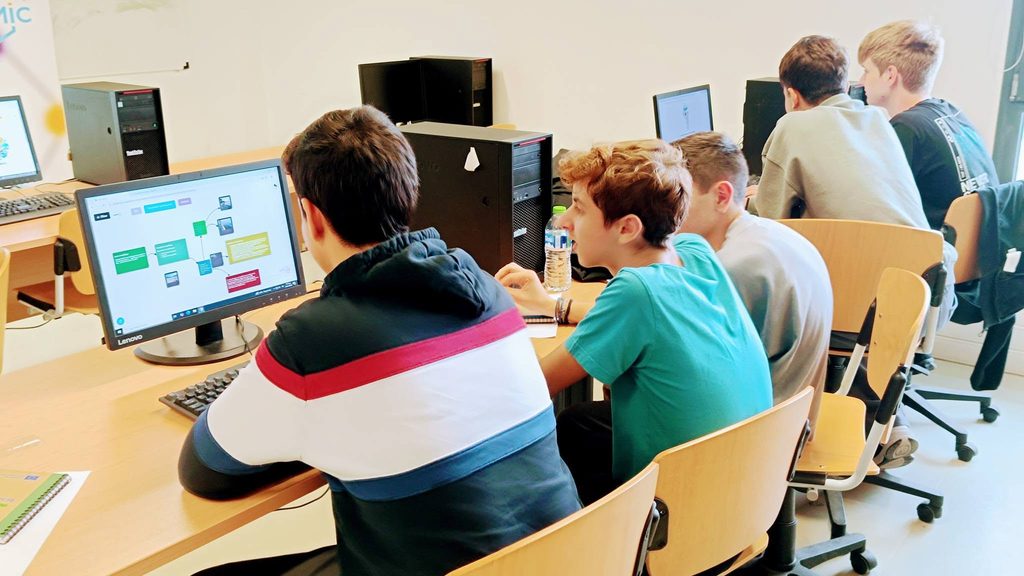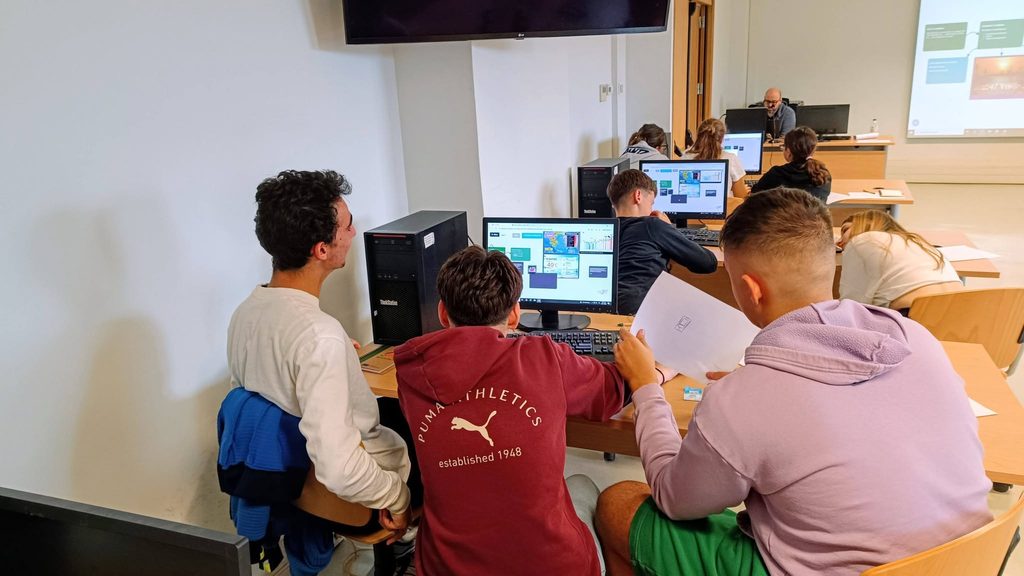
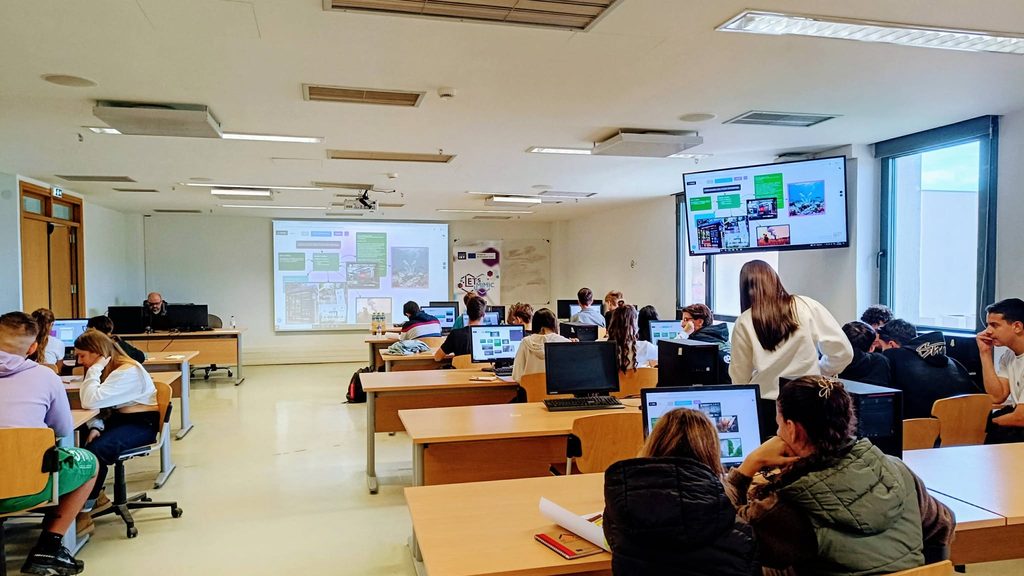
On 18 November 2026, the Creative Technologies Learning Lab (CTLL) of the Department of Electrical and Computer Engineering, University of Thessaly, welcomed 26 first-year students (approximately 15 years old) from the 2nd Model High School of Volos for a follow-up LET’s MIMIC multiplier event. The activity took place at the Department and combined nature-inspired design with practical sustainability challenges.
This was the school’s second participation in a LET’s MIMIC multiplier event, following its visit on 17 December 2025. The return visit was requested by teacher Ms Naoumidou in response to the positive experience of the first workshop. Importantly, the participating students were members of the school’s Biomimicry Study Group (Όμιλος Βιομίμησης), a formally recognised extracurricular learning group established after the initial event to explore themes beyond the regular curriculum.
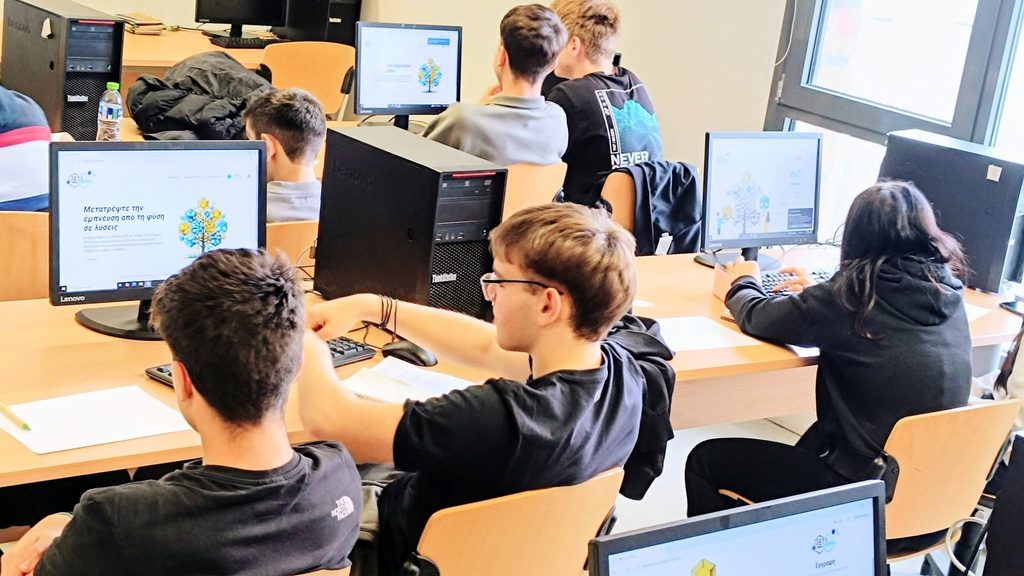
The creation of this group represents a particularly meaningful outcome of LET’s MIMIC: biomimicry was not limited to a one-off educational experience but became the subject of continued, school-led learning. The new workshop aimed to deepen the group’s practical engagement with the project methodology and connect nature-inspired innovation with environmental challenges relevant to Volos and its coastal setting.
The session built on the school’s prior involvement while remaining accessible to the new group of students. An introductory discussion revisited the central idea of biomimicry: learning from the forms, functions and strategies of living systems to develop solutions that use resources responsibly and respond to environmental challenges.
Students explored the LET’s MIMIC six-step design process—Define, Biologise, Discover, Abstract, Emulate and Evaluate—and considered how each step helps move from a real-world problem to a nature-inspired proposal. Practical examples illustrated how biological strategies can inform shading, energy efficiency, water management, material use and pollution prevention. The project’s learning resources and Digital Learning Platform supported the exploration of ideas and the collaborative design activities.
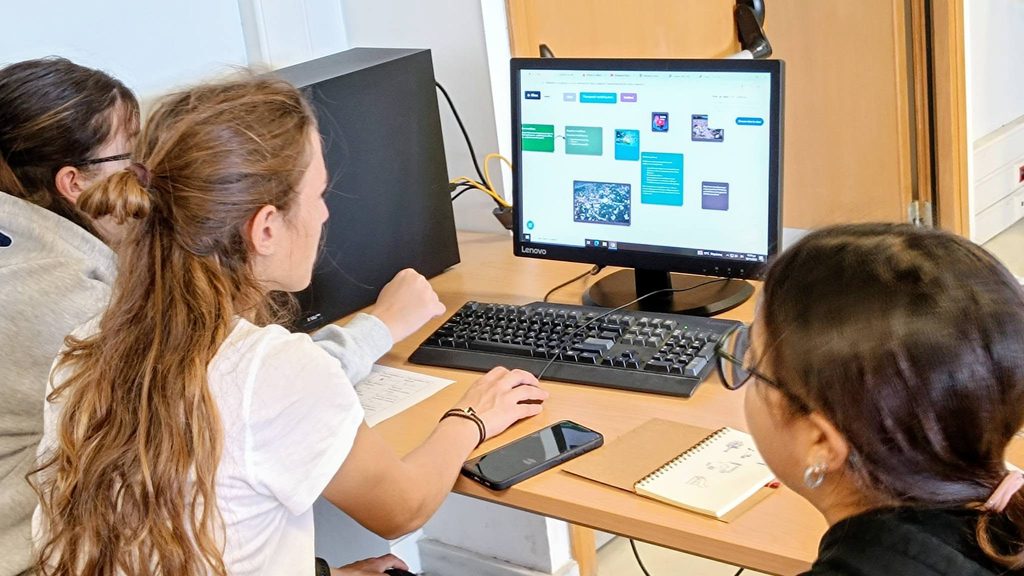
The main workshop challenge was to consider how Volos could become a cleaner, more resilient and more sustainable city. Instead of assigning a single predetermined problem, students worked in teams on issues of particular interest to them. Their proposed project directions included:
Students identified the problem, searched for relevant natural analogies and discussed which underlying principles might be adapted to a practical urban solution. They then developed preliminary concepts and shared their ideas with peers, considering environmental benefits, limitations and possible improvements. The emphasis was on the reasoning and creative process rather than on producing finished technical prototypes.
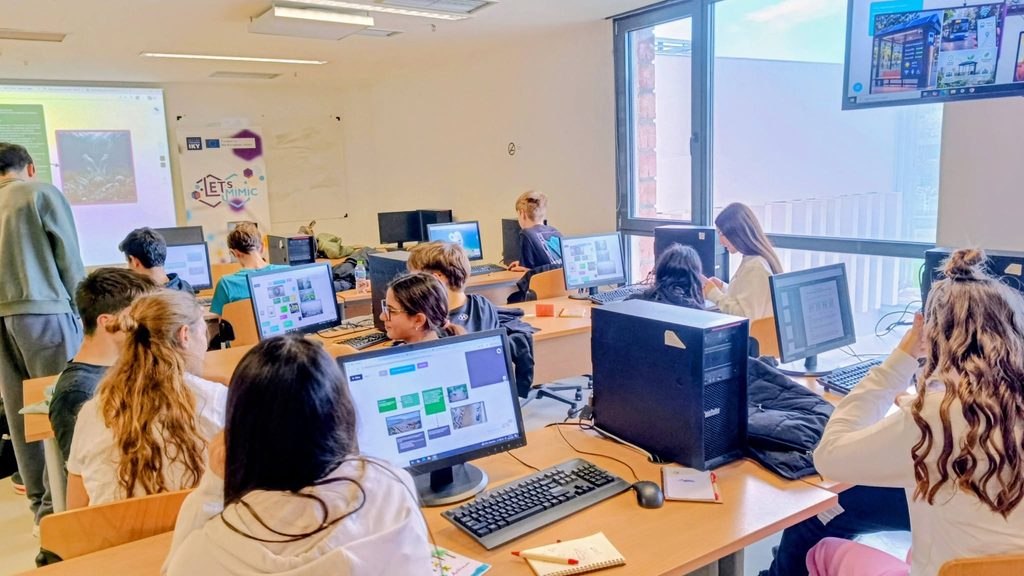
The workshop also connected with the school’s wider sustainability interests. Its Biomimicry Study Group complements other school clubs addressing urban design and green cities, creating opportunities for students to approach shared challenges from different perspectives. A concluding discussion considered how nature-inspired design could enrich these ongoing school activities and support future student projects.
The event demonstrated evidence of sustained institutional uptake. After its first multiplier event in December 2025, the school established a formally recognised Biomimicry Study Group. The teacher-requested return visit provides tangible evidence that the LET’s MIMIC approach generated sufficient interest to become part of ongoing extracurricular learning.