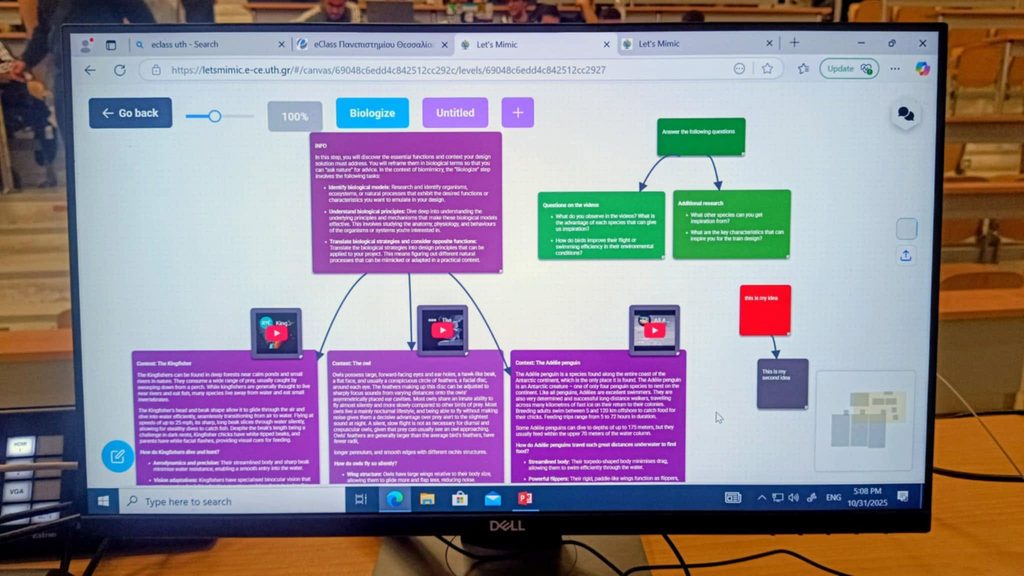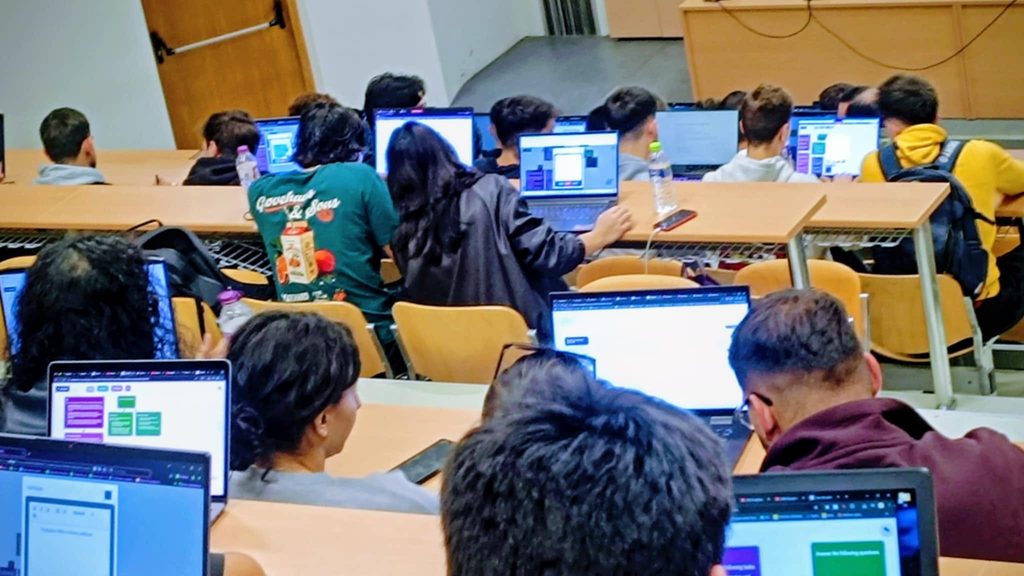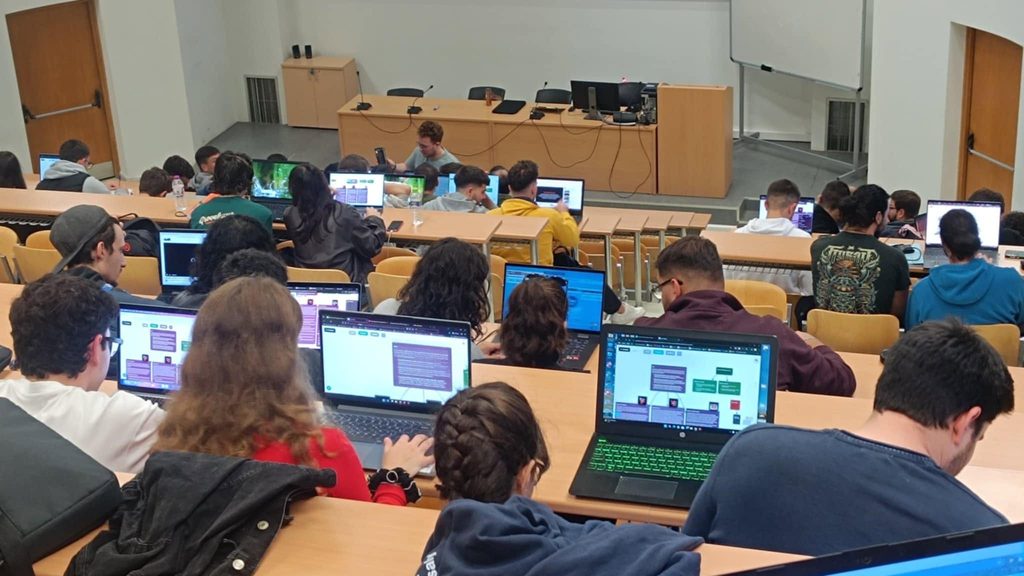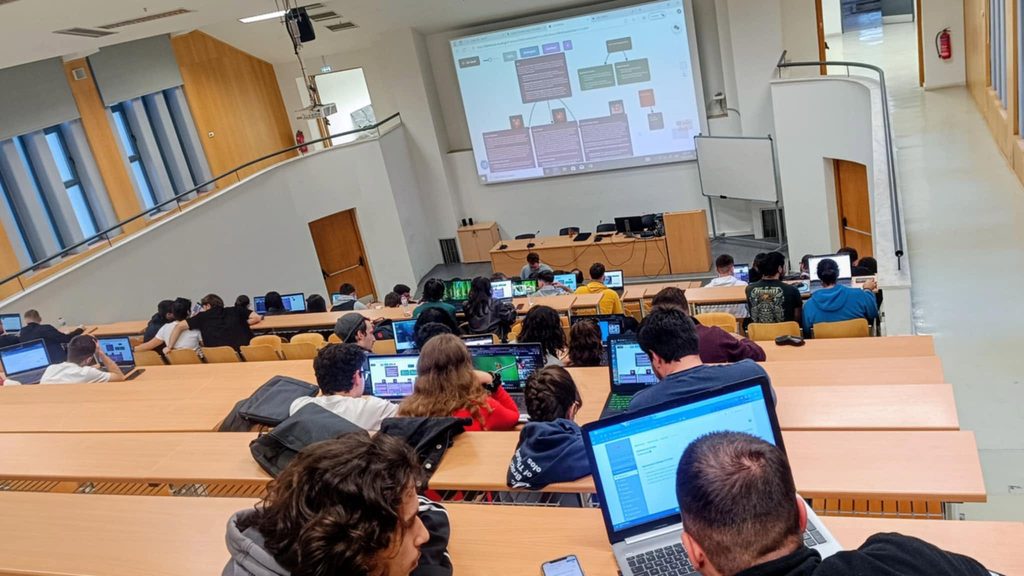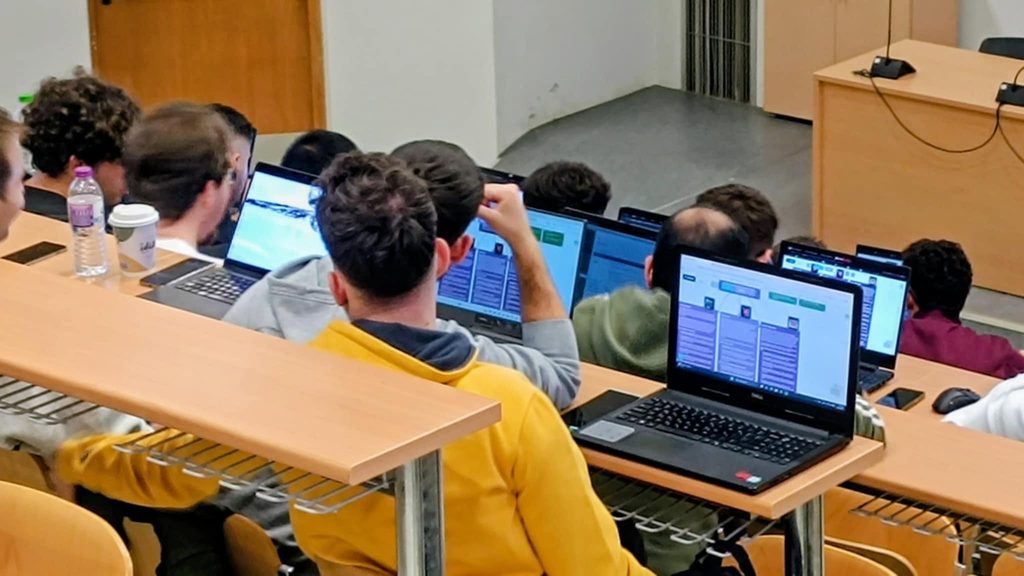
Piloting was conducted within the Design Thinking course (ECE553) offered by the Department of Electrical and Computer Engineering at the University of Thessaly. It is an elective course offered in the ninth semester of the undergraduate programme, combining theoretical instruction with laboratory-based activities that promote experiential learning. The activity allowed piloting at the tertiary level in a department considered vocational at the higher qualification levels under the EU definition, which includes polytechnic departments as VET providers given their practical and hands-on approach to learning (CEDEFOP, 2011).
The pilot engaged 132 students of the Department of Electrical and Computer Engineering. Students used LET’s MIMIC digital services and learning resources in a dedicated workshop focused on designing innovative sustainability solutions.
The course aims to strengthen students’ capacity for innovation and develop key competencies modern engineers need, including critical thinking, creativity, teamwork, and problem-solving. Through a human-centred design approach, students learn to design solutions that better address user needs by applying methods such as empathy, observation, discovery, ideation, prototyping, and evaluation.
Within this context, Design Thinking encourages students to approach complex problems from multiple perspectives, promoting iterative experimentation and collaborative learning. The course emphasises practical design skills through project-based activities, where students analyse real-world challenges, generate ideas, and develop prototypes that meet user and societal needs.
Given its focus on innovation, sustainability, and user-centred problem-solving, the course provides an appropriate educational environment for integrating the Biomimicry methodology and evaluating its contribution to the learning experience. Learners participated in activities following the DEFINE, BIOLOGISE, DISCOVER, ABSTRACT, EMULATE, and EVALUATE stages to develop innovative, nature-inspired solutions.
The piloting aimed to assess learners’ understanding of the methodology, engagement and motivation, the usefulness of the learning resources, the usability of the digital platform, the quality of collaboration, and the overall learning experience. The consortium collected data through a questionnaire, and the results are presented below.