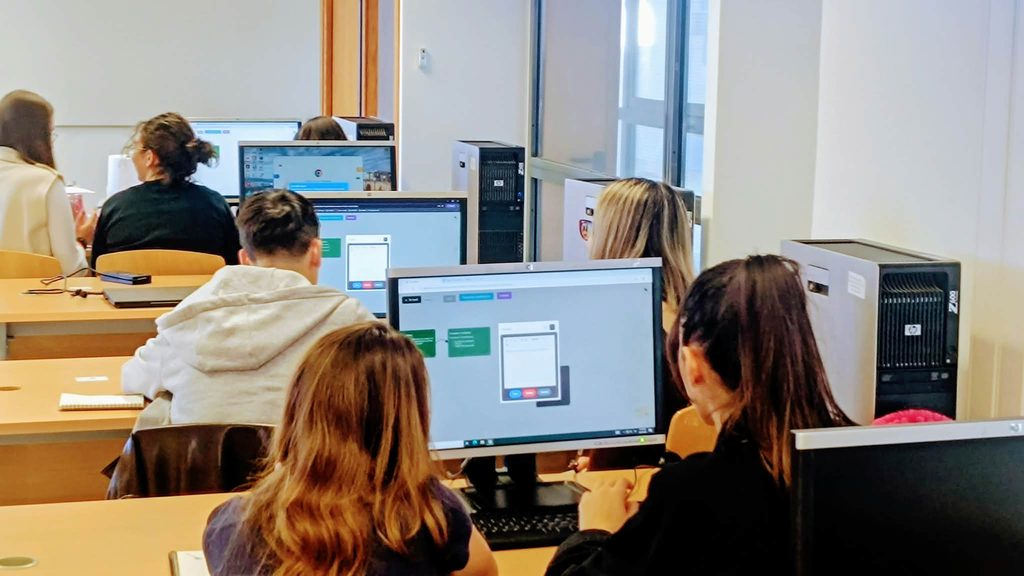
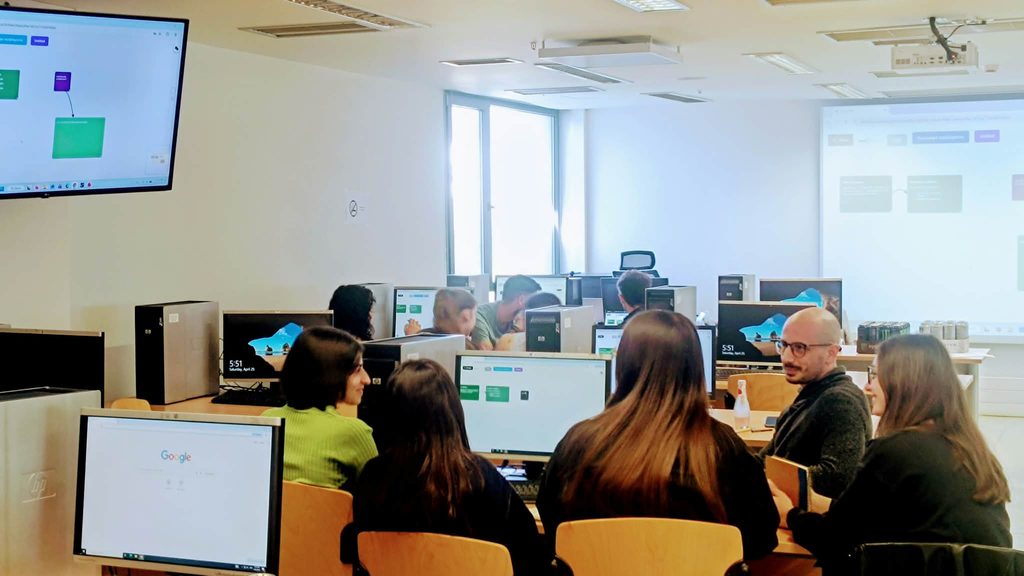
The Department of Electrical and Computer Engineering of the University of Thessaly, through its Creative Technologies Learning Lab (CTLL) research group, organised a workshop with the IEEE Women in Engineering Student Branch of the University of Thessaly in June 2025. The branch aims to promote the engagement of women in engineering principles. Approximately 30 students attended the event. While this is note counted as a formal multiplier event, it is presented here as the presentation was significant, invited, very well received, and with impact.
The workshop combined introductory presentations with hands-on collaborative learning activities:
- Introduction to biomimicry. Participants were introduced to the principles of biomimicry and explored examples of how natural forms, processes and systems can inspire innovative solutions to environmental and technological challenges.
- Presentation of LET’S MIMIC. The project’s objectives, six-step biomimicry methodology, educational resources and Digital Learning Platform were presented, highlighting their applications in sustainability education.
- Exploration of local sustainability challenges. Participants discussed environmental challenges affecting Volos, including urban sustainability, climate resilience and quality of life, identifying opportunities for nature-inspired interventions.
- Hands-on collaborative workshop. Working in small groups, participants used the LET’S MIMIC platform to investigate natural models and develop green solutions aimed at making Volos a more sustainable and environmentally friendly city. The activities encouraged the practical application of the biomimicry methodology through collaborative problem-solving.
The workshop promoted awareness of biomimicry and demonstrated the practical relevance of LET’S MIMIC outcomes to engineering education and sustainable urban development. It was very well received and generated significant interest not only within the participants but more widely at the University of Thessaly due to its dissemination in social media. Its main educational contributions included:
- Sustainability awareness. Strengthened participants’ understanding of environmental challenges and the potential of using inspiration from natural models, processes and ecosystems to address them in a manner that works with nature and not against it.
- Creativity and problem-solving. Encouraged participants to explore biological strategies and translate them into innovative proposals for improving urban sustainability and quality of life, making human environments more liveable and preserving resources for future generations.
- Digital and collaborative learning. Provided hands-on experience with the LET’S MIMIC platform, supporting teamwork, idea sharing and collaborative solution development. Participants used the LET’s MIMIC digital learning platform to collaborate, build on each other’s ideas and general innovative, nature-inspired solutions to sustainability challenges.
- Interdisciplinary thinking. Demonstrated how biological knowledge, engineering and technology can be combined to address real-world challenges, linking student’s education to everyday problems and showing how engineering can improve quality of life.
- Women in innovation. Encouraged the engagement of women engineering students in sustainability-oriented design and technological innovation, showing how nature-based solutions can support traditional engineering practices.